What does Fair Trade mean in the tuna factory?
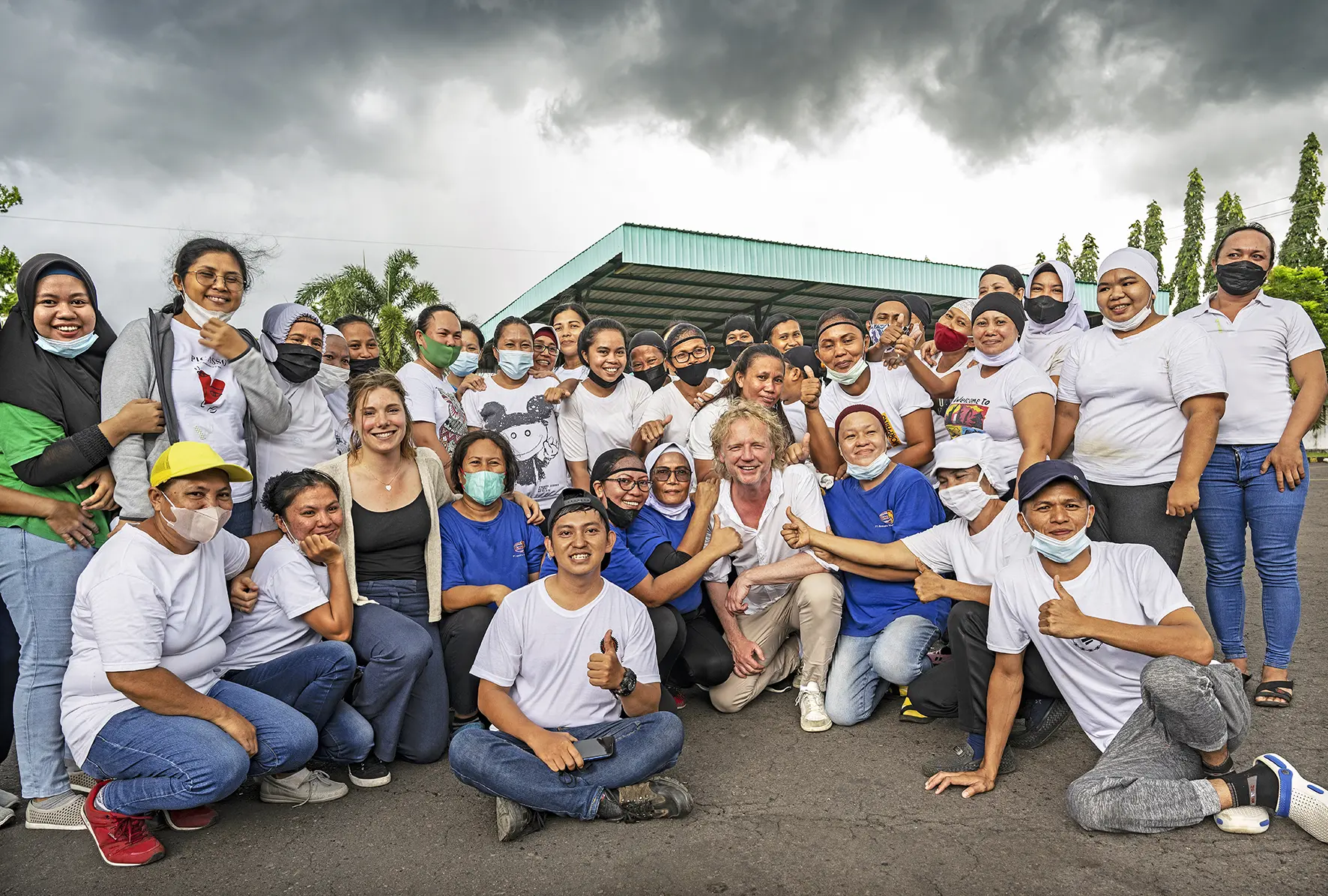
An interview with Meike Stella Batos from Bitung! The Fair Trade certification for canned tuna not only protects the rights of fishermen at sea but also those of factory workers where tuna is processed. The factory that produces canned Fair Trade tuna for Fish Tales is located right by the harbor in Bitung, Indonesia. In February 2020, they received the Fair Trade certificate. Meike Stella Batos has been working there for over eight years and explains how she personally experiences this quality-mark.
Less risk of slipping
Meike works in the so-called 'loining area', where the white tuna fillet (loins) is separated from the red meat. On a typical day, she processes around 300 kg (660 lbs) of tuna. Meike and all of her colleagues process over 40 tons per day. The use of sharp knives, hydraulic machines, and conveyor belts make working in the factory potentially dangerous. Fortunately, Meike notices that since the introduction of Fair Trade, awareness of employee safety has increased.
“Wearing gloves is now mandatory for everyone in the filleting department. As a result, the number of cuts has drastically reduced. An additional benefit is that my hands don't age as quickly,” Meike says, proudly showing her hands to the camera.
An anti-slip layer has also been applied to the factory floor. “Rinsing fish and work equipment means the floor is continuously wet. In the past, this has led to dangerous situations, but since the new coating we run much less risk of slipping.”
Anonymous reporting
Meike considers the introduction of the 'box' to be the most important improvement since the factory became Fair Trade certified. Anyone can leave an anonymous message in this box if they feel that something is wrong. This could be a complaint about inadequate safety or incorrect behavior by a supervisor. This system has given everyone the opportunity to address a problem without the risk of retaliation. Meike: “I know colleagues who have used this whistle-blower system. And the great thing is, action was actually taken by management. This option truly gives me a sense of security.”
Work that pays off
For Meike, a work week consists of five full days and a half day on Saturday. Since Fair Trade, income has been linked to Indonesian law. “Salary payments are now always on time, and overtime worked is paid out. At Christmas, I receive holiday pay, and I continue to be paid when sick.”
Meike now sees her colleagues as friends. She has known most of them for eight years, and now they even see each other outside of working hours. “We discuss everything with each other. Because of this, time seems to fly by. There are a few ladies who also run an online shop from home, for example selling T-shirts, but that's not for me. I prefer to spend my time at home with my children, at the beach, or in church.”
 Meike Stella Batos in Bitung
The company chef vs Meike
For Meike, the highlight of every workday is lunch, when employees can relax for an hour. The menu includes roast chicken, salted fish, or beef stew with steamed rice and, of course, a generous spoonful of sambal. All colleagues agree that the quality of the food has significantly improved since certification. However, even the company chef cannot match Meike's culinary skills. Her favorite is Abon Ikan: a traditional dish with dried tuna, local herbs, and coconut milk. “I love making this dish at home when we have many guests. The community in Bitung is close-knit and warm, so our house is always pleasantly full on weekends.”
Successful daughters
Meike has two daughters. The youngest, 19, has just finished high school and now works in the same factory as her mother, in the dried fish department. The eldest, 23, is almost finished with her aquaculture studies, or fish farming. There is enormous potential for this in Indonesia. “On the one hand, I hope both my daughters have successful careers. On the other hand, I already dread the idea of them having to move to the other side of the country for it. They've never been so far away from me.”
When asked if Meike herself has dreams for the future, she replies: “Every year I look forward to going back to the village where my family lives, about a three-hour bus ride from Bitung. Since the Fair Trade certification, one dream has already come true, because I no longer have to worry about the future. But if I can really dream, I would love to go on holiday to America someday!”