Welcome to Bitung!

- Glein Stein
- Pole and line
- Partner since 2015
- Bitung, Indonesia

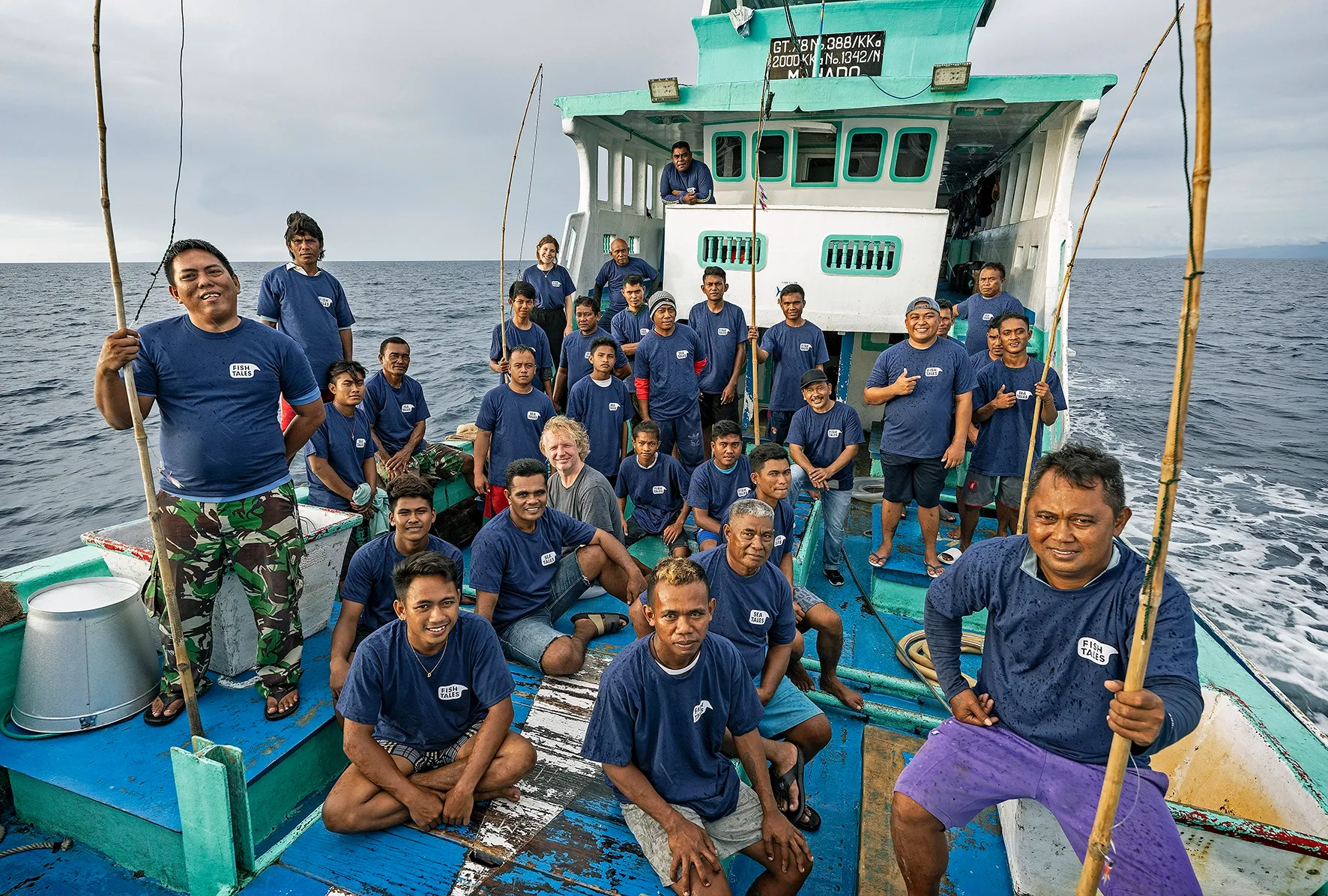
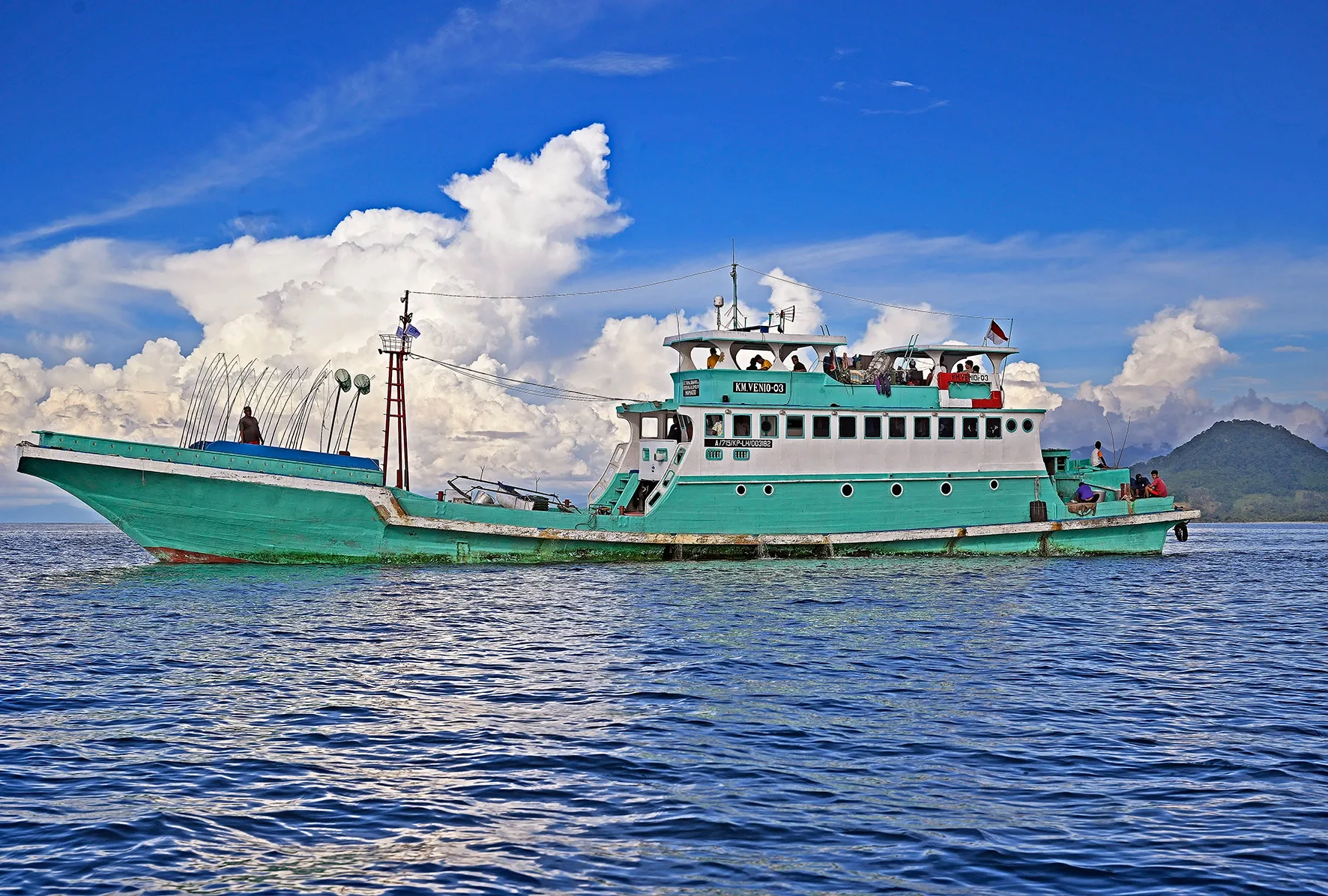
In Bitung, everything revolves around tuna fisheries. We work with six boats, all of which catch the tastiest tuna with pole and line. Glein, our proud fisherman on the packaging, is one of the fishermen on these boats. Every fishing trip starts with a burst of activity. The boats are filled with ice, bamboo rods and enough food to last a week. Glein and the rest of the crew sail out to the clear blue Celebes Sea, looking for small fish to use as bait for their prized skipjack tuna.
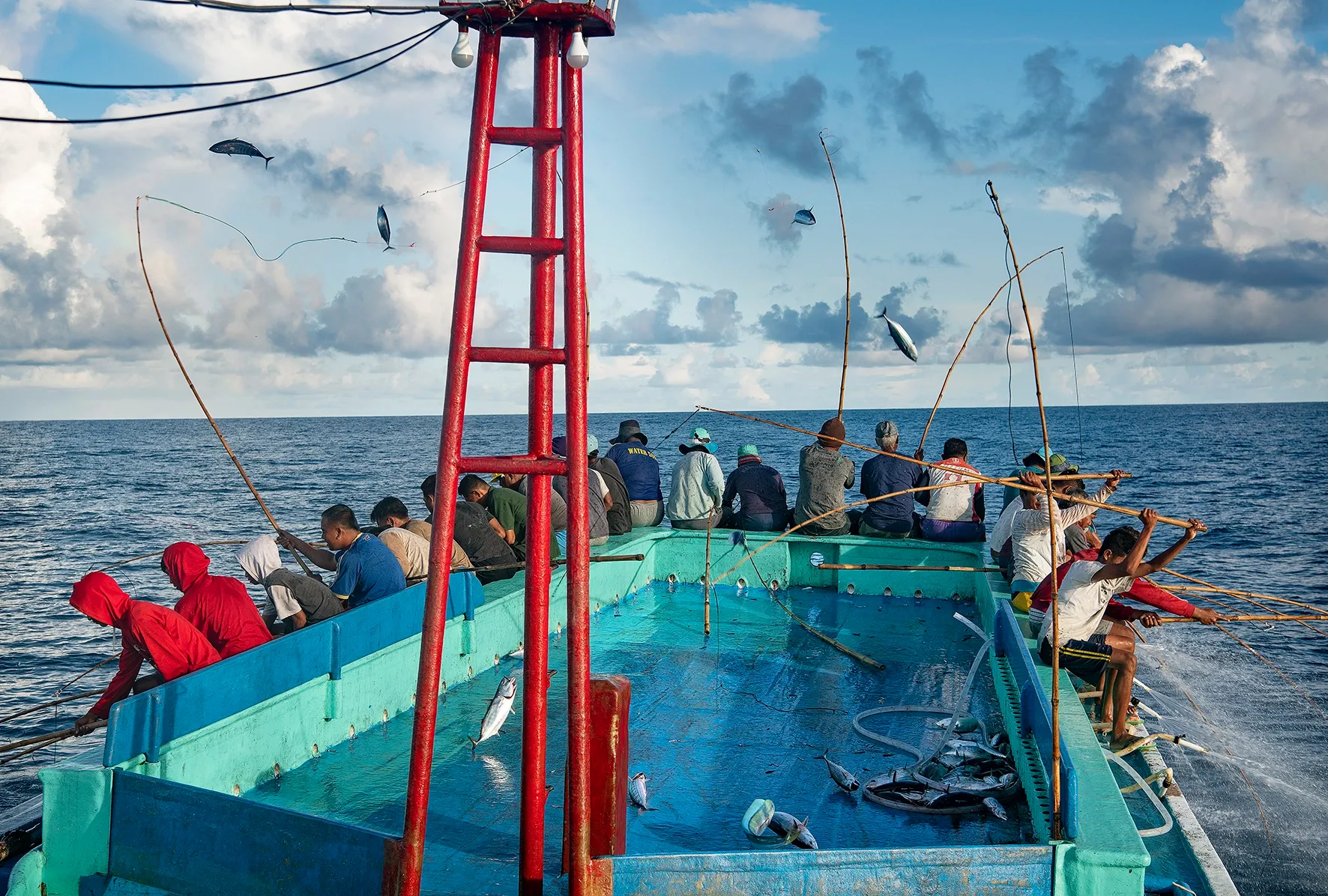
The fishers sit on either side of the boat, and soon the first tuna comes flying through the air. Thanks to the traditional pole-and-line method, by-catch is kept to a minimum, protected species are spared, and the seabed stays undisturbed. Glein: "It's the only truly sustainable way to catch tuna — and the pride of Bitung!"
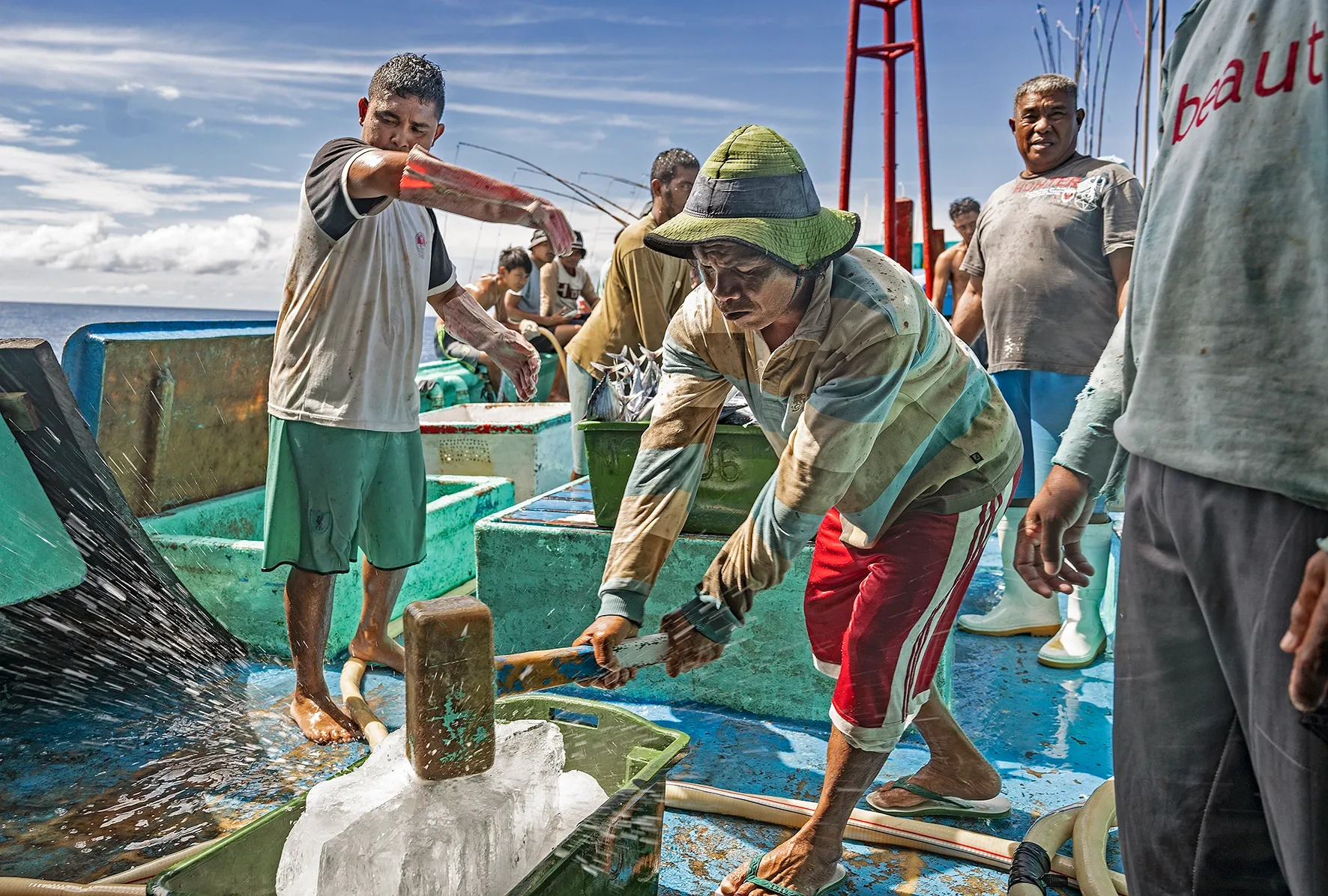
On a good day, the boats in Bitung bring in 7000 kilograms (15400 lbs) of tuna per ship — enough for no less than 30,000 cans of tuna! The catch goes directly onto ice, so the fish stays fresh until it reaches the harbor.
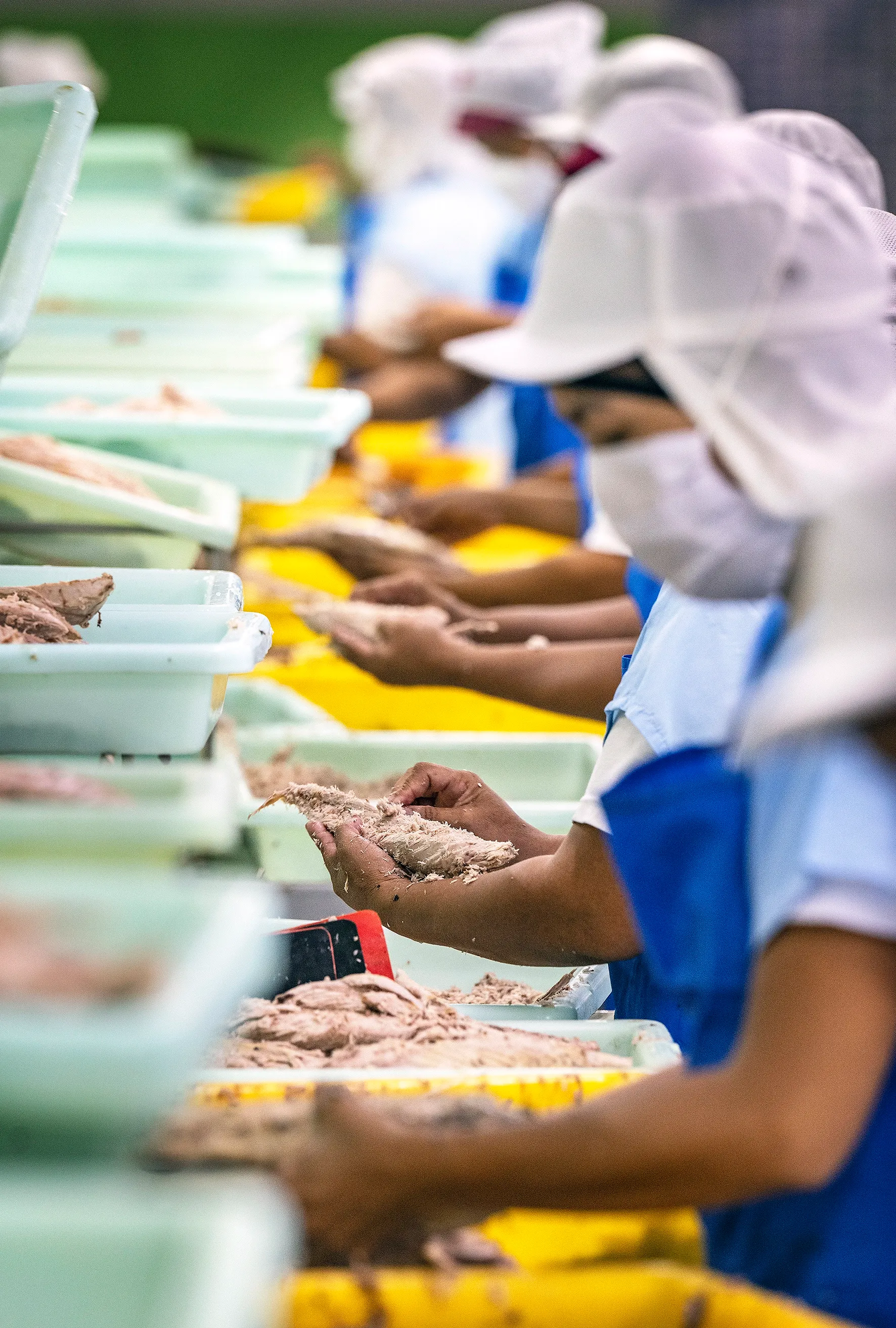
Right next to the harbor is the factory. Here the tuna is largely processed by hand. The people who work at the factory come from Bitung and the surrounding villages. Entire families are active in the tuna fishery, from catch to processing. This tuna is produced locally, allowing the value to remain within the fishing community.

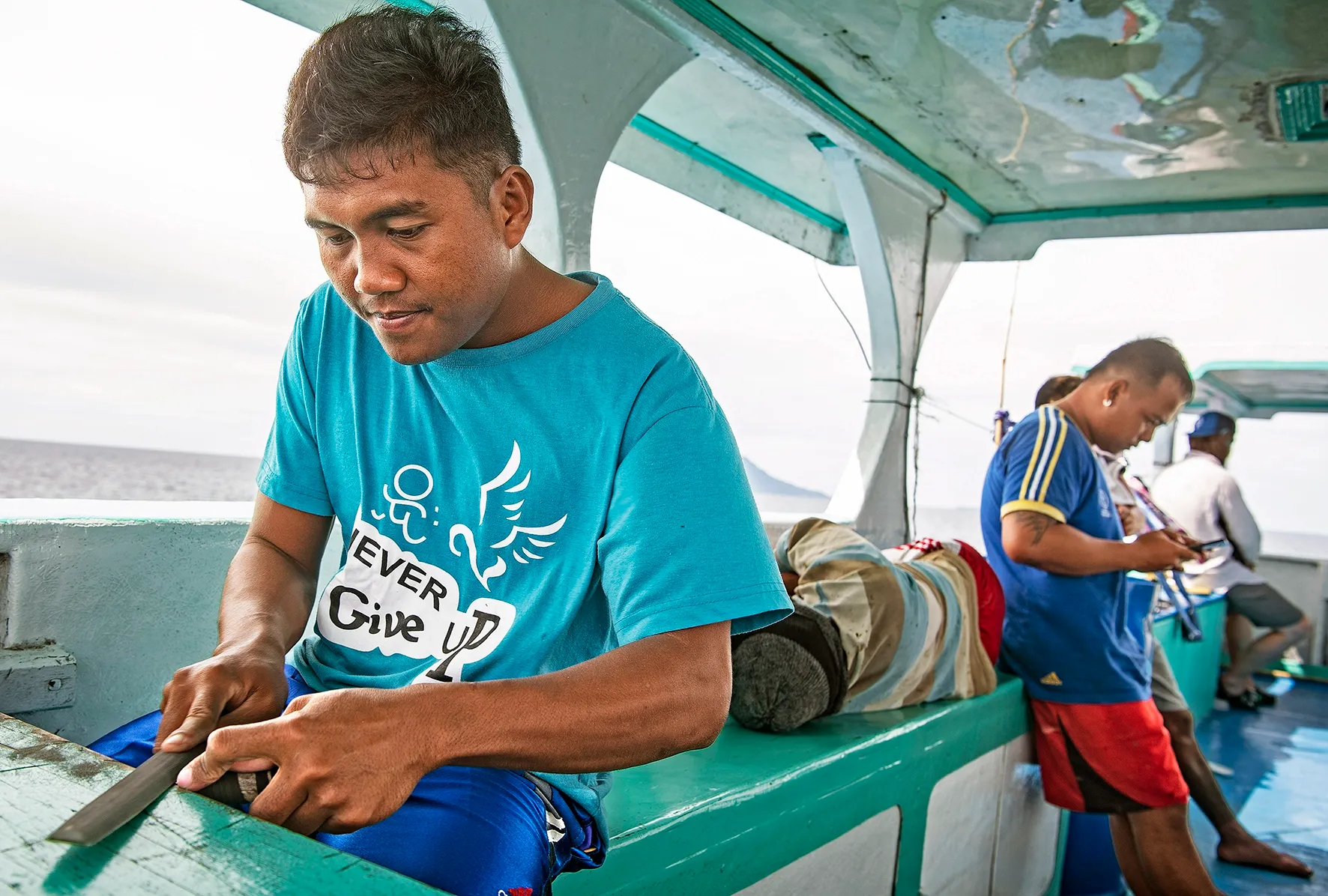
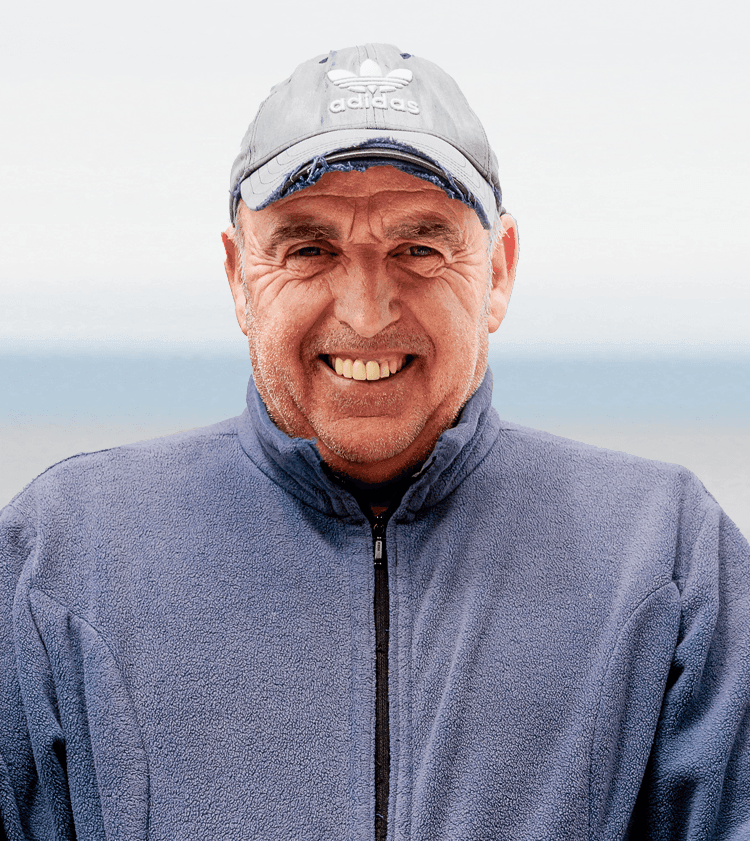
Like many of the other tuna fishermen in Bitung, Glein Stein comes from a long line of fisherfolk. He learned how to catch fish at a young age. Now, as an ambassador for Fish Tales, he is depicted proudly on our cans. Together with his crew, he seeks adventure at sea. Pole-and-line fishing gives him an enormous kick every time. "The adrenaline after every catch - that feeling is truly incomparable!" Glein is proud that the fishery is Fair Trade certified. He is one of the active members of the union that the fishermen have set up. "With this union, we can stand up for ourselves. And thanks to the premium, we can also do something extra, such as paying school fees for our children or a beach clean-up."

Mercury in fish is something to be aware of, but it needs some context. Mercury enters oceans through human pollution and is stored in the tissue of fish. The longer a fish lives and the higher it is in the food chain, the more mercury it can accumulate. Smaller fish tend to have much lower levels.
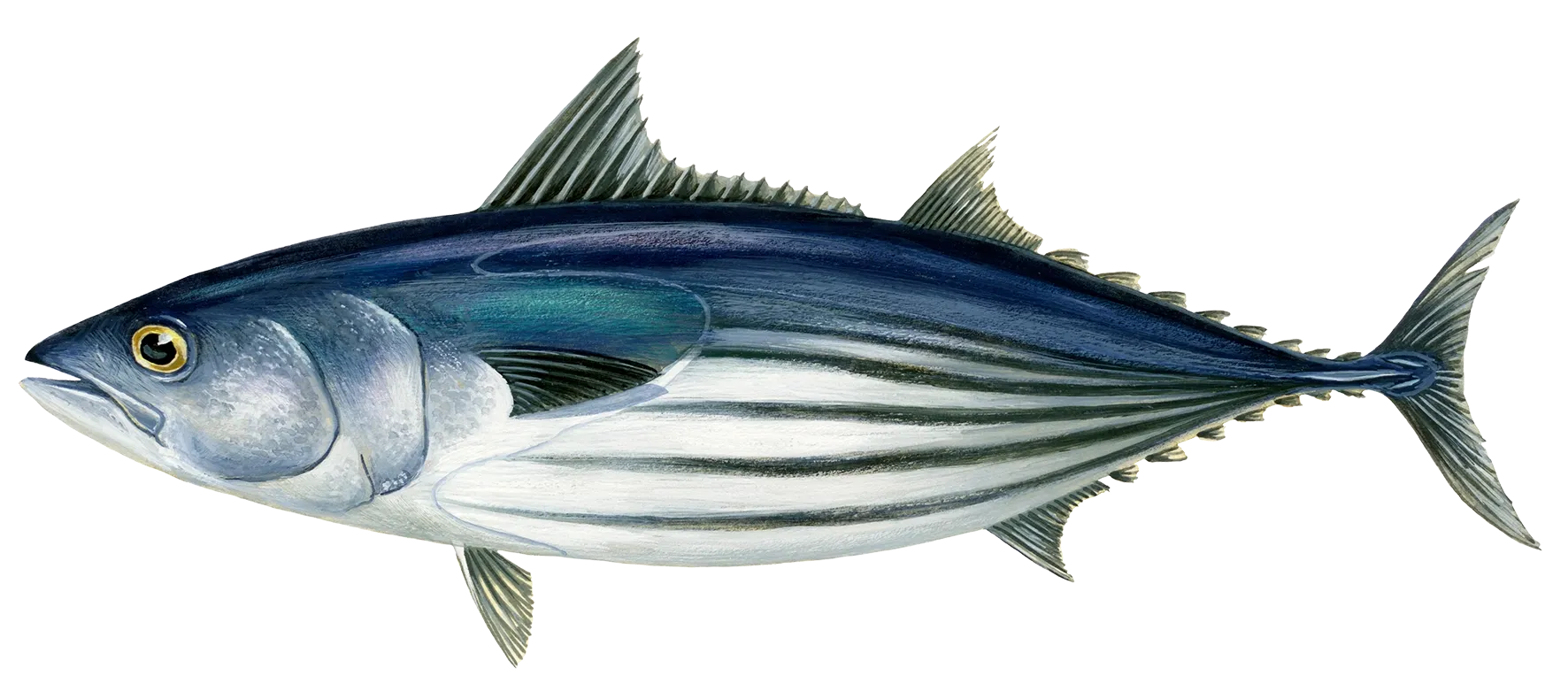
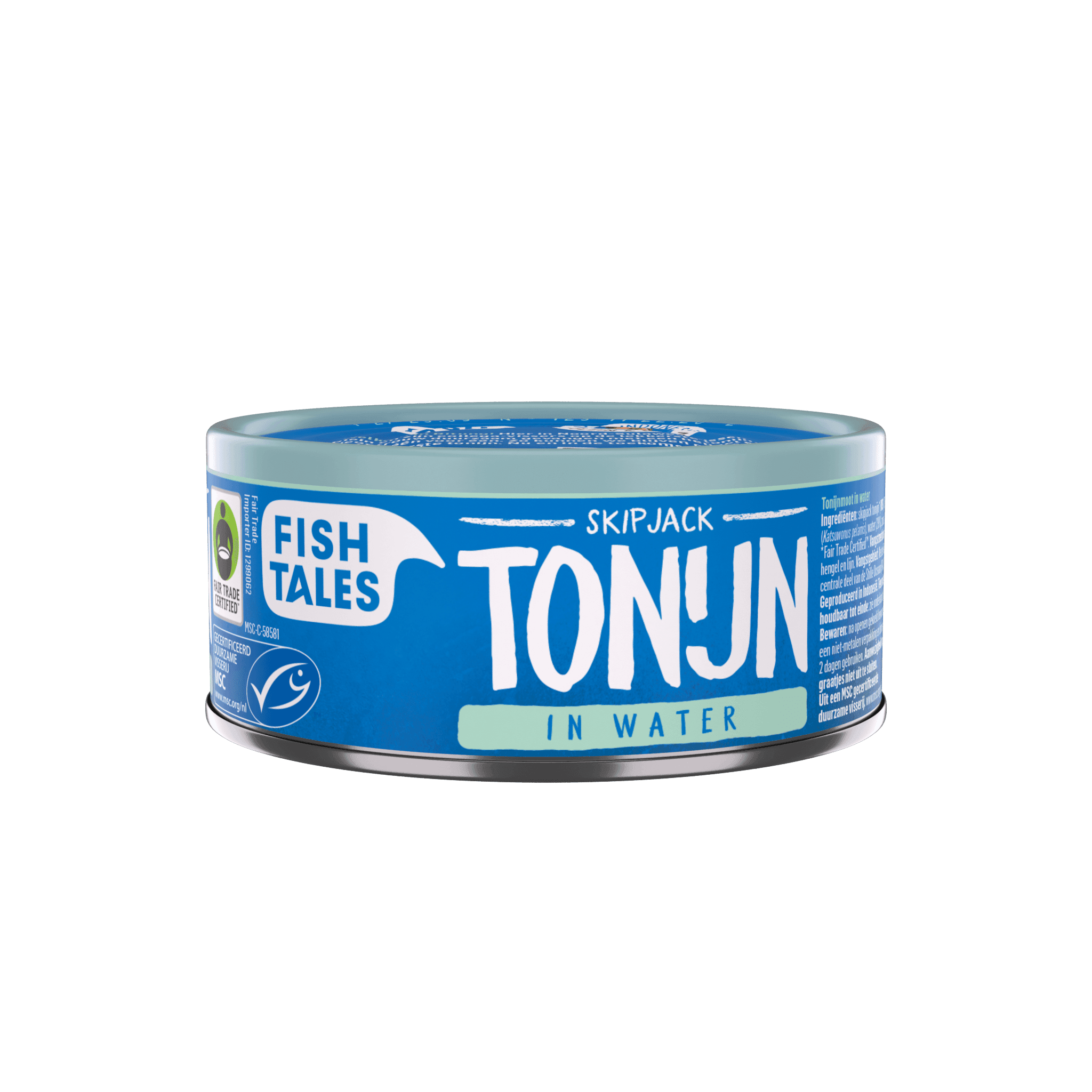
The tuna in our cans in the Netherlands is skipjack (Katsuwonus pelamis). This is a smaller tuna species that matures quickly and accumulates less mercury. The levels in our tuna typically range from 0.1-0.2 mg/kg, which is well below the legal limit of 1 mg/kg and under the standard fish limit of 0.5 mg/kg.
Skipjack tuna is packed with protein and fits very well into a healthy and nutritious diet. Per 100 grams, you get no less than 25 grams of protein, ideal for maintaining your muscles.
Skipjack tuna, also known as Katsuwonus pelamis, is a smaller tuna species and the star of canned tuna. This fish has a strong, distinctive tuna flavour that enthusiasts recognize immediately. Skipjack contains less fat than larger tuna species, but still offers plenty of protein and omega-3 fatty acids.
Another advantage? Skipjack contains significantly fewer harmful substances like heavy metals, because it is smaller - therefore lower in the food chain, and has a shorter lifespan.
Our skipjack tuna is caught in the Western Central Pacific Ocean (FAO 71), off the coast of North Sulawesi in Indonesia. If you purchased the skipjack tuna in organic olive oil, it comes from the Maldives. Here, Ahmed, like all other tuna fishermen in the Maldives, fishes with a pole & line.
Are you pregnant? Then it's best to skip tuna for now. Don't worry, you can still enjoy the health benefits of fish! For example, choose our smoked Norwegian salmon (provided it's well-heated) twice a week, or our wild Sockeye salmon (also well-heated) once a week. This way you'll still get those valuable omega-3 fatty acids.
Want to know if your tuna is a sustainable choice? Pay attention to three things:
-
MSC Certification Check if the tuna is MSC-certified. This ecolabel guarantees that the fish has been caught in an ecologically responsible manner, in areas with good agreements on fishing quotas that prevent overfishing.
-
Fishing Method Pole and line is the most sustainable way to catch tuna. With this method, fish are caught one by one, with minimal risk of bycatch of other species. Other methods, such as longline and purse seine, can have a greater impact, especially if no measures have been taken to prevent bycatch.
-
Origin and Species Look at where the fish comes from and what species it is. This will help you to better understand how sustainable your choice is.
-
You will find an expiration date on all our products, this will tell you exactly how long it is good for. Thanks to high-temperature sterilization and airtight packaging, our cans remain good for a long time. Tuna in water has a shelf life of at least 3 years after production, and tuna in oil up to 5 years! After that date? Trust your senses: look, smell, taste – and enjoy.
Have you already opened the can? Store the tuna in a non-metallic, airtight container in the fridge. This way, it will remain good for another 2 days!
Are you the kind of tuna fan who could open a can every day? We totally get it! But, as with everything, moderation is key. Excessive intake of mercury can pose health risks, but with normal consumption, there’s no need to worry.
The European Food Safety Authority (EFSA) recommends eating fish 1 to 4 times a week for the best health benefits. Stick to that, and you can keep enjoying the very best Fish Tales tuna with peace of mind!
Skipjack tuna is a true powerhouse on your plate! This fish contains hardly any unhealthy saturated fats, and it is a top source of omega-3 fatty acids. With just one serving, you get the daily recommended amount of omega-3. These fatty acids (EPA and DHA, or fish fatty acids) are great for your brain and support a healthy cardiovascular system. And as if that weren't enough: skipjack tuna is also packed with protein. Per 100 grams, you get no less than 25 grams of protein, ideal for maintaining your muscles.
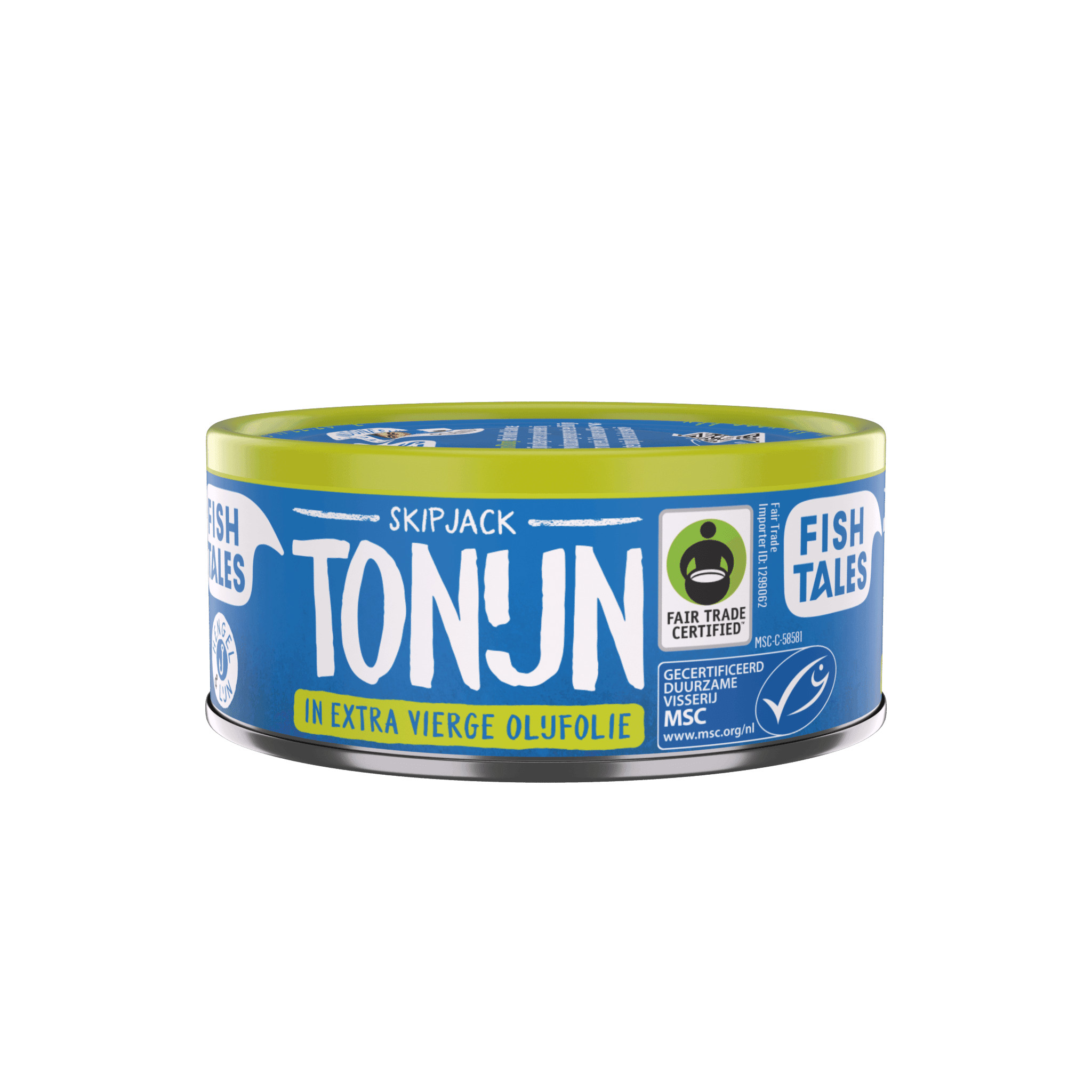
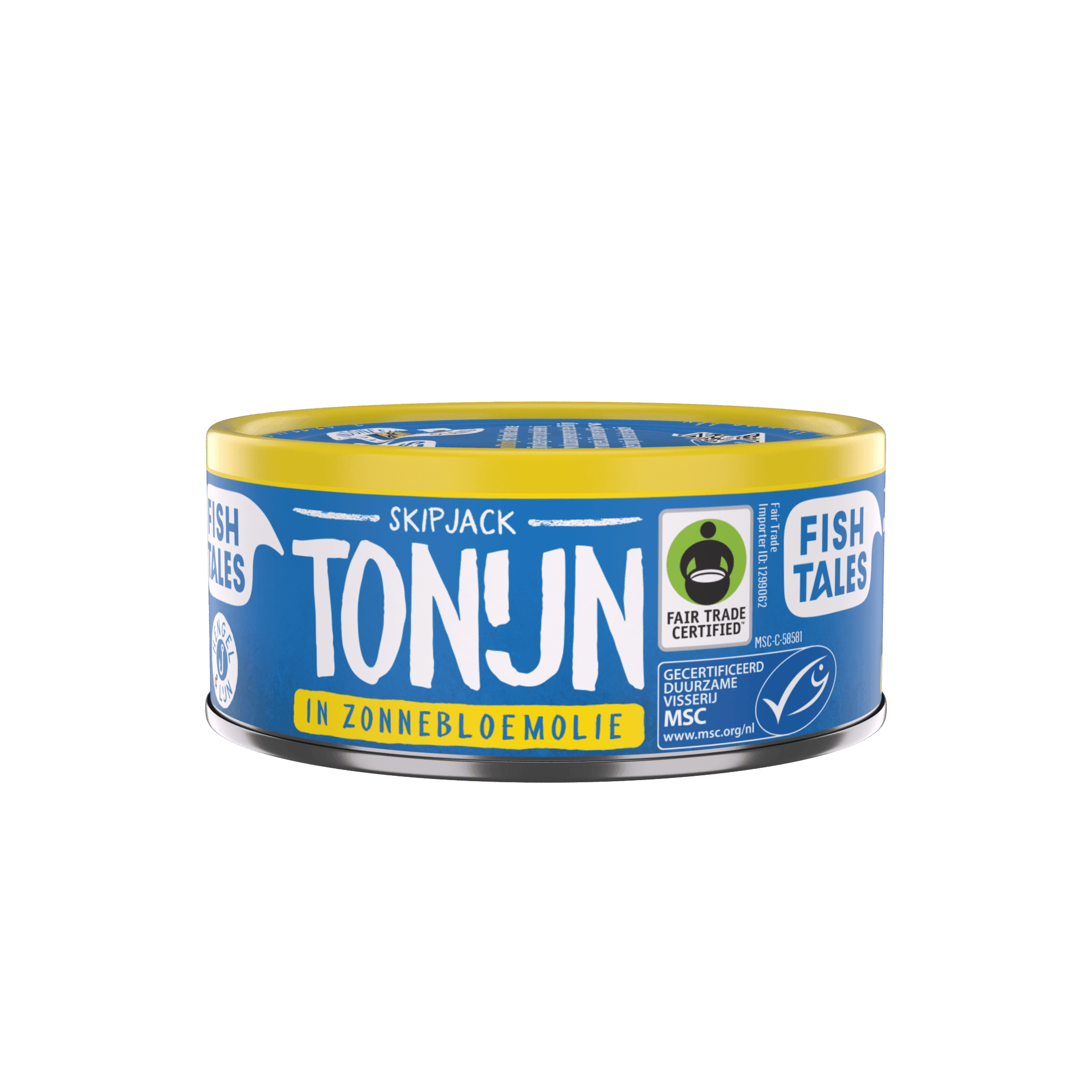
You'll find the Fair Trade logo on cans of skipjack tuna from Indonesia. This logo means that the fishery meets the requirements of the Fair Trade certificate. This includes, among other things, that the fishermen work under safe and fair conditions, such as the presence of enough life jackets, safety training, a complaints procedure, sufficient good quality water and food on board, and much more! The fishermen have also united in a fishing cooperative and receive a premium per kg of tuna sold. Fish Tales pays this directly to the fishermen. With this, they set up projects that benefit the community, such as distributing food packages, organizing a beach clean-up, or health insurance for fishing families.
The possibilities are endless! Salads, pasta dishes, wraps, sandwiches... Tuna takes any meal to the next level. Need inspiration? Take a look at our recipes – easy, healthy, and so delicious you’ll want to start cooking right away!


Jack Mackerel

Sardines

Atlantic salmon
Anchovy

Herring

Cod
salmon

Wild sockeye salmon

Cod
Zeeland mussels

skipjack tuna

Albacore tuna
Albacore tuna